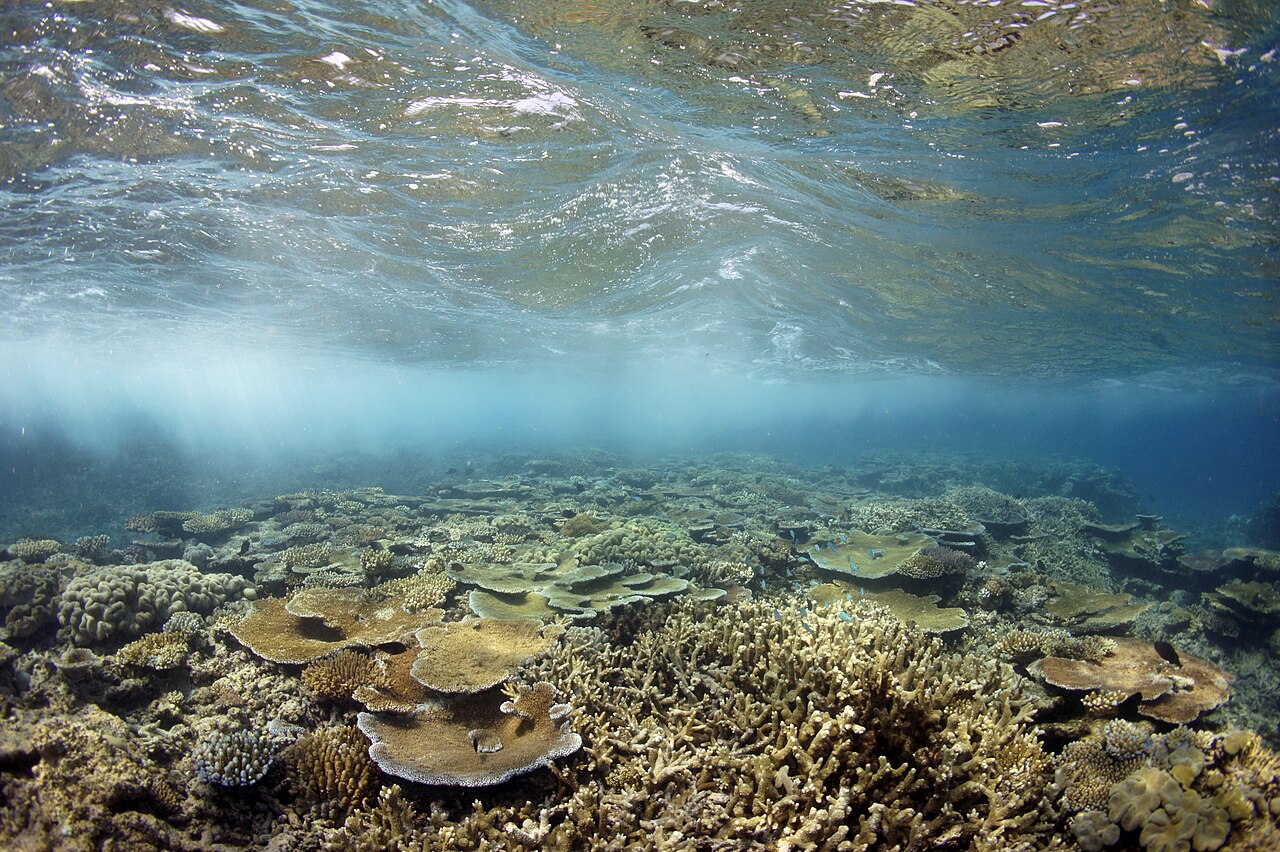
What is pushing the reefs.
The pressures on coral reefs worldwide, each with the evidence behind it and what works against it.
Photo: Holobionics (CC BY-SA 4.0)
At a glance
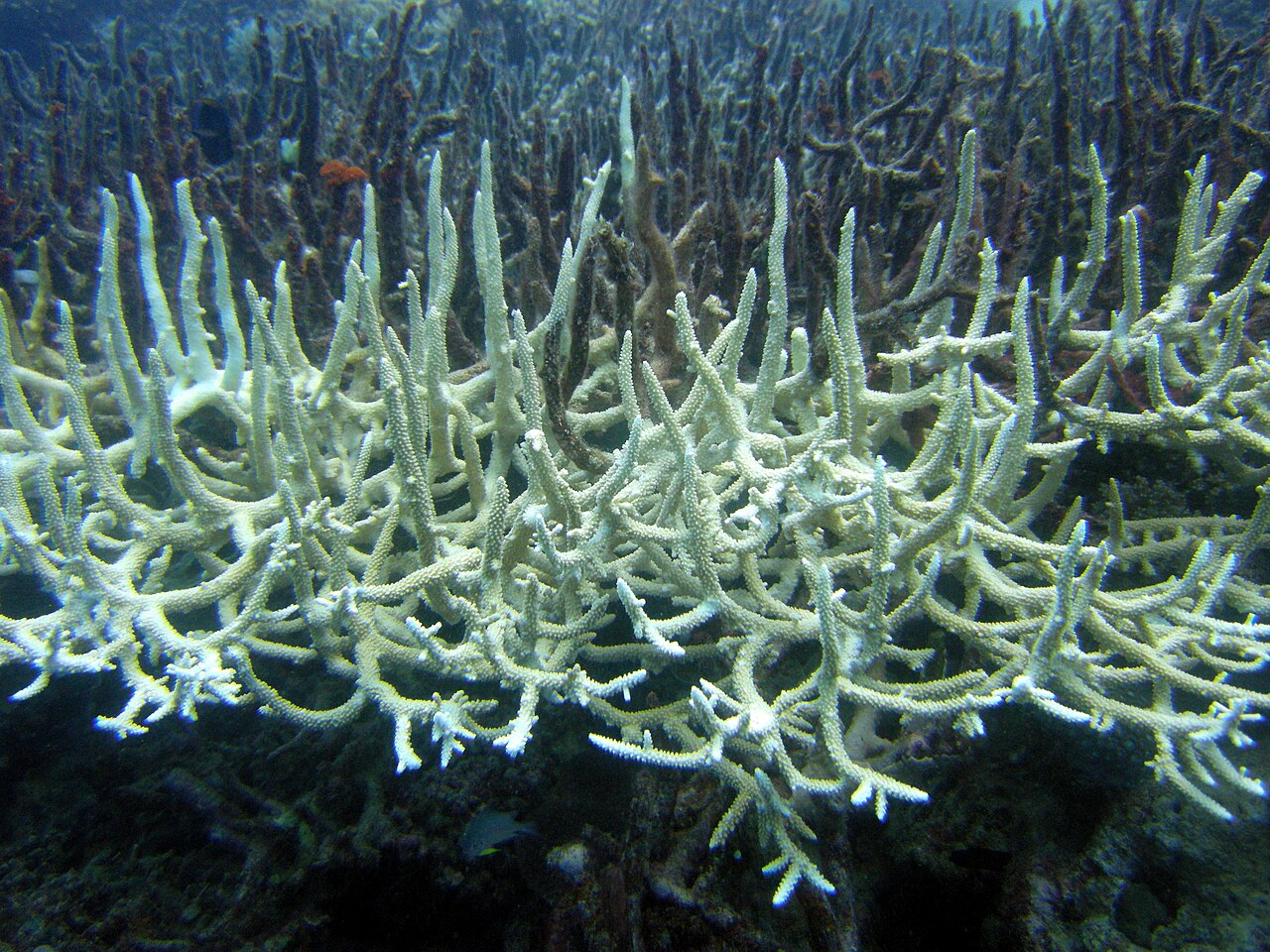 Coral bleachingSince 2023, bleaching-level heat stress has reached about 84% of the world's coral reef area. Why corals…
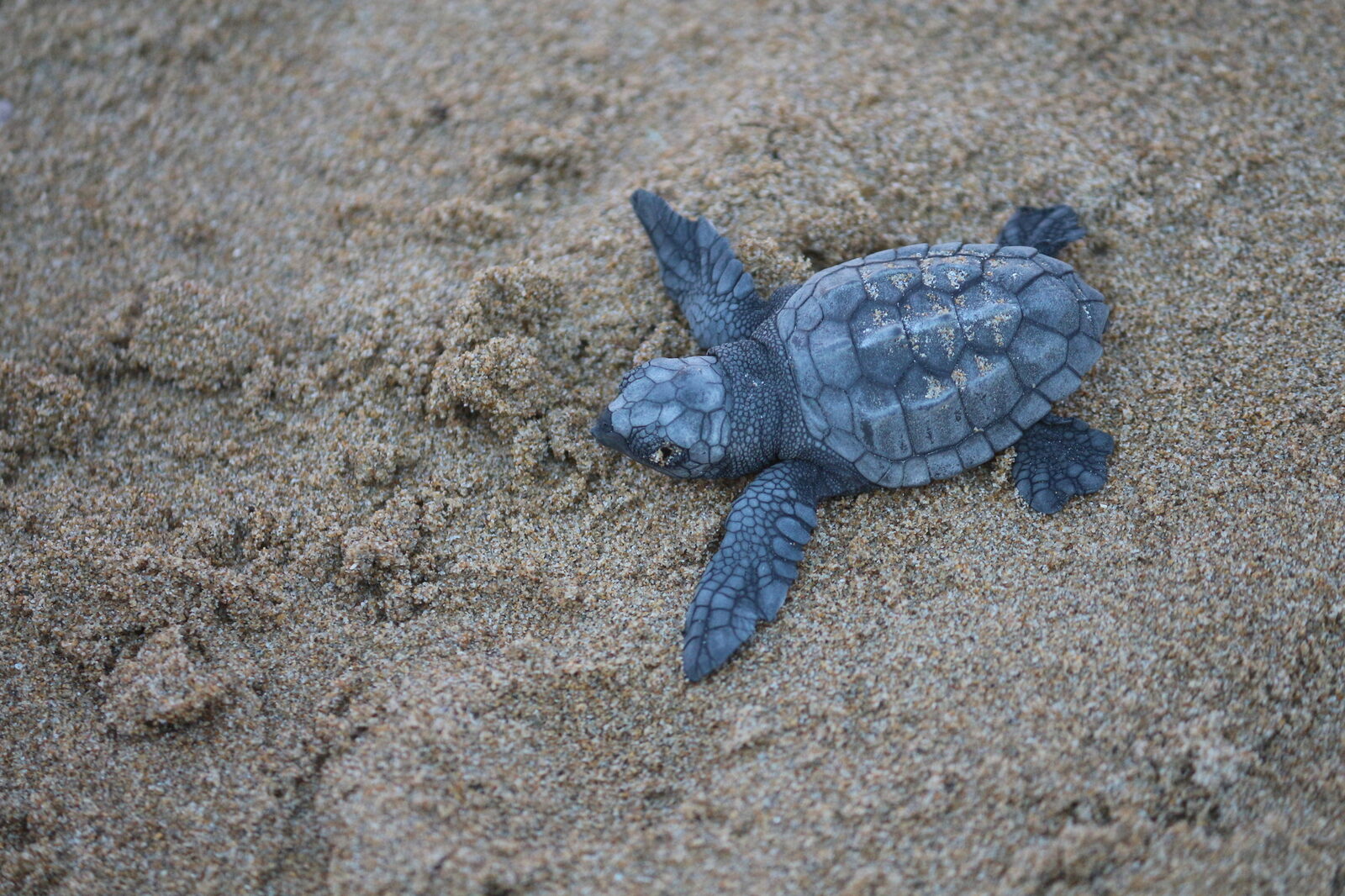 Ocean warmingThe upper ocean keeps taking up heat. What warming and marine heatwaves do to corals, fish and the people…
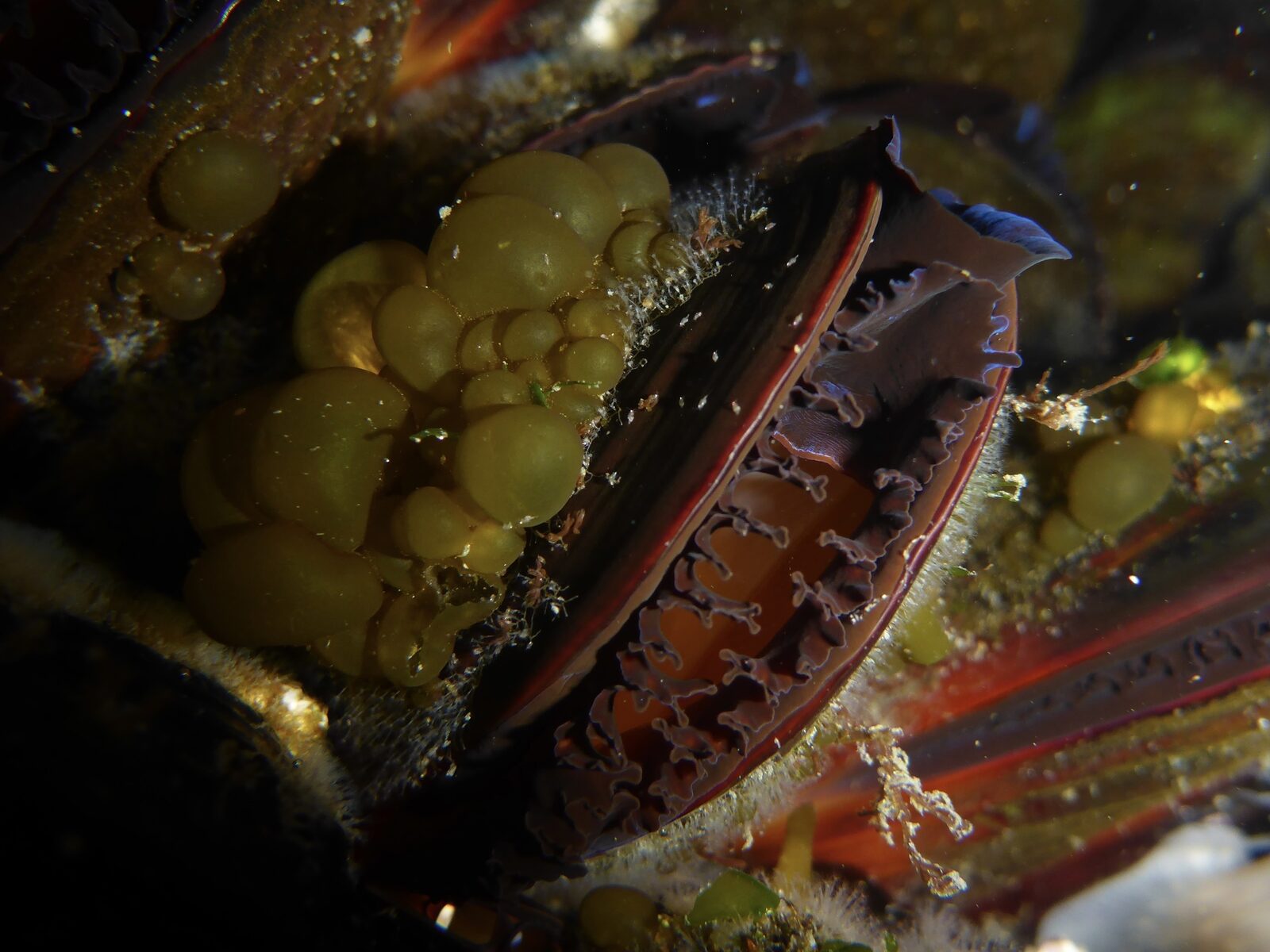 Ocean acidificationThe ocean has become about 30% more acidic since the industrial age, and has crossed its safe planetary…
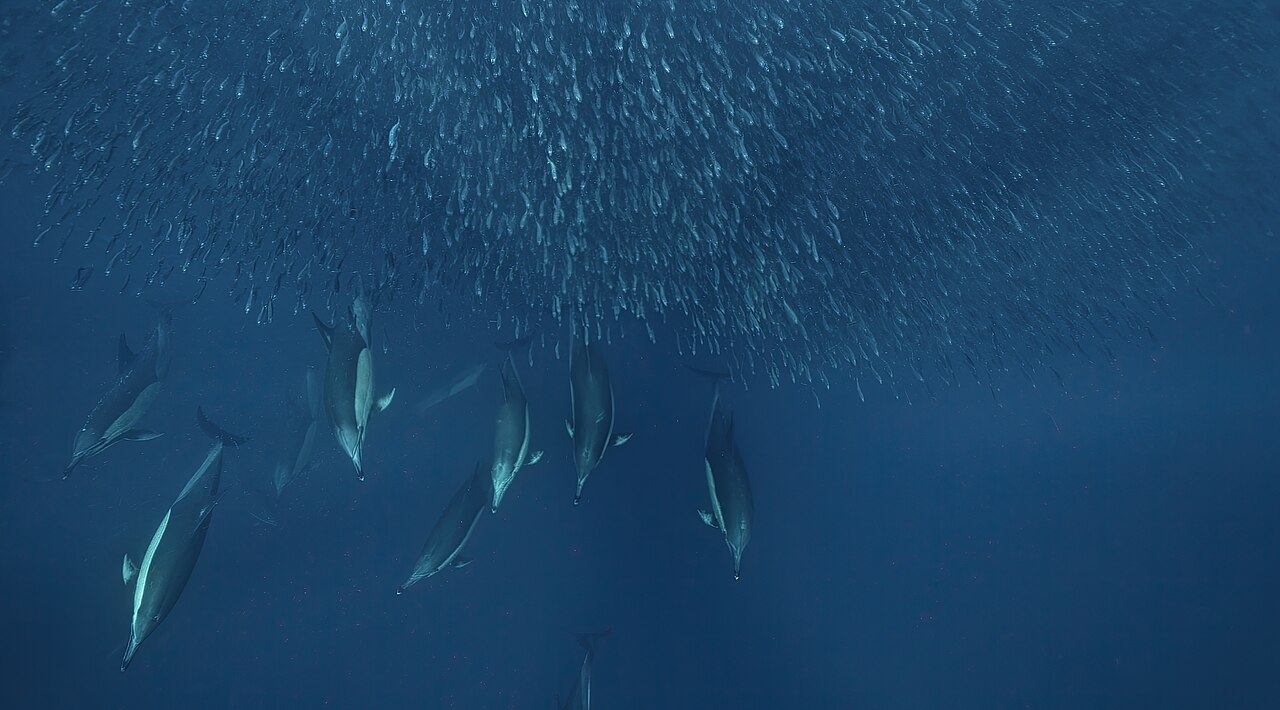 OverfishingMore than a third of the world's assessed fish stocks are overfished. Where fishing is heaviest, what it…
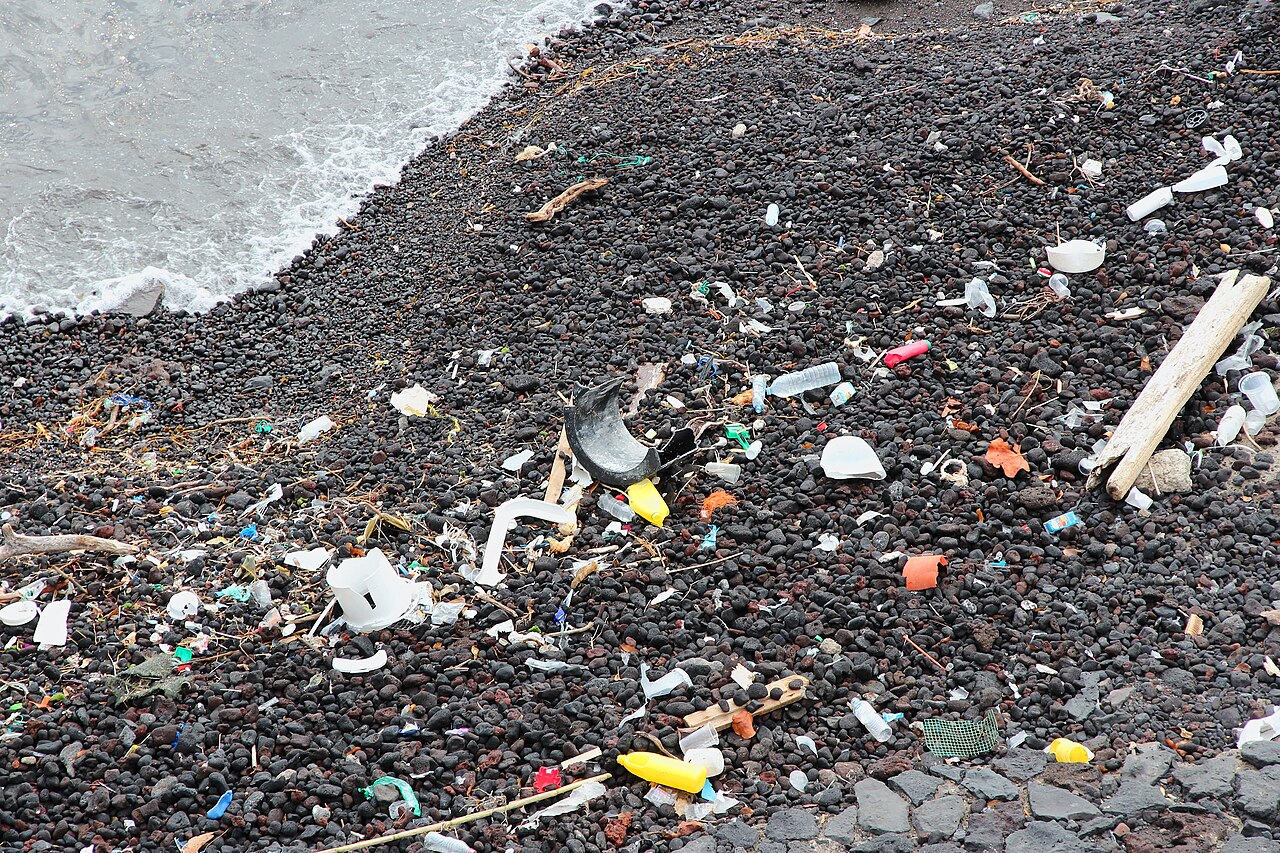 Plastic pollutionWhere plastic waste escapes into rivers and the sea, which habitats and animals it hits, and what is…
Coral bleaching
Reef-building corals live in partnership with tiny algae inside their tissue, which give them most of their energy and their colour. When the sea stays unusually warm for too long, corals lose those algae and turn white. A bleached coral is not dead, but it is under severe stress.
From 1 January 2023 to 30 September 2025, bleaching-level heat stress affected about 84.4% of the world's coral reef area.
Source: NOAA Coral Reef Watch
Photo: Matt Kieffer
Ocean warming
The ocean has taken up most of the extra heat trapped by greenhouse gases. A warmer sea holds less oxygen, shifts where fish can live, and brings marine heatwaves that can bleach and kill corals.
Preliminary estimate: upper-ocean (0–2,000 m) heat content rose by 23 ± 8 zettajoules from 2024 to 2025.
Source: WMO · 2025 was one of the warmest years on record (preliminary)
Photo: Radu Teodoreanu (CC BY 4.0)
Ocean acidification
The ocean takes up nearly a third of the carbon dioxide people release. That slows global heating, but the gas reacts with seawater and makes it more acidic. Since the start of the industrial age, the surface ocean has become about 30% more acidic.
Since the start of the industrial era, the ocean's surface pH has fallen by around 0.1 units, a 30 to 40% increase in acidity. In 2025, scientists found that ocean acidification has crossed its safe planetary boundary.
Source: Stockholm Resilience Centre · Planetary Health Check 2025
Photo: Cricket Raspet
Overfishing
Fish feed billions of people and almost everything else in the sea, from dolphins and seabirds to sharks and whales. Overfishing means taking fish faster than they can breed and grow back.
FAO's 2025 assessment of 2,570 marine fish stocks found 35.5% overfished.
Source: FAO · Global marine fish stock assessment 2025
Photo: Stanislav Stelmakhovich
Plastic pollution
Most of the plastic ever made still exists in some form. Large amounts reach rivers and the sea every year, where it breaks into ever smaller pieces.
More than 400 million tonnes of plastic are made every year.
Source: UNEP · Turning off the Tap (2023)
Photo: Marek Ślusarczyk (Tupungato) Photo portfolio
4PLANET
For a Living Planet
Independent, no ads, free for everyone. Join and follow the living planet with us.