Reducing food waste
A way to bring nature back into balance, and what it takes to work.
In 2022 the world wasted 1.05 billion tonnes of food, almost a fifth of all food available to consumers. Households wasted more than a billion meals a day, while 783 million people were affected by hunger.
Food loss and waste causes 8–10% of global greenhouse gas emissions, almost five times as much as aviation, and uses the equivalent of almost a third of the world's farmland. It can be cut: in the UK, partnerships between government, businesses and charities helped reduce household food waste per person by more than a quarter between 2007 and 2018.
Why it matters
- In 2022 there were 1.05 billion tonnes of food waste, 132 kg per person and almost one-fifth of all food available to consumers. UNEP · Food Waste Index Report 2024
- Of that, 60% happened in households, 28% in food service and 12% in retail. UNEP · Food Waste Index Report 2024
- Households wasted over 1 billion meals a day in 2022, while 783 million people were affected by hunger. UNEP · Food Waste Index Report 2024
- Food loss and waste generates 8–10% of global greenhouse gas emissions, almost five times that of aviation, and takes up the equivalent of almost a third of the world's agricultural land. UNEP · Food Waste Index Report 2024
- In the UK, food waste partnerships helped cut household food waste per person by more than a quarter from 2007 to 2018. UNEP · Food Waste Index Report 2024
What it helps protect
How it works, and its limits
How it works
- Measure it: countries, shops and kitchens that measure waste find it and cut it
- Plan, store and use up food at home: most waste happens in households
- Redistribute surplus food from shops and caterers to people who need it
- Turn what cannot be eaten into animal feed or compost, not landfill
Limits, and what it needs
- Only four G20 countries and the EU measure food waste well enough to track progress
- Hotter countries waste more at home where cold chains are weak
- Cutting waste helps most when it also cuts how much food is produced
Pressures it answers
What the world has agreed
- Sustainable Development Goal 12.3: by 2030, halve per capita global food waste at the retail and consumer levels and reduce food losses along production and supply chains. United Nations · SDG 12.3
- Target 16 of the Kunming-Montreal Global Biodiversity Framework commits countries to halve global food waste by 2030. CBD · GBF Target 16
What you can do
- Plan meals, shop with a list and freeze what you will not eat in time
- Know the difference: 'best before' is about quality, 'use by' about safety
- Use apps and local groups that rescue surplus food
Questions people ask
Where is most food wasted?
At home. According to UNEP, 60% of food waste in 2022 happened in households, 28% in food service and 12% in retail.
Does reducing food waste really work?
Yes. In the UK, partnerships between government, businesses and charities helped cut household food waste per person by more than a quarter between 2007 and 2018.
Sources and photo credits
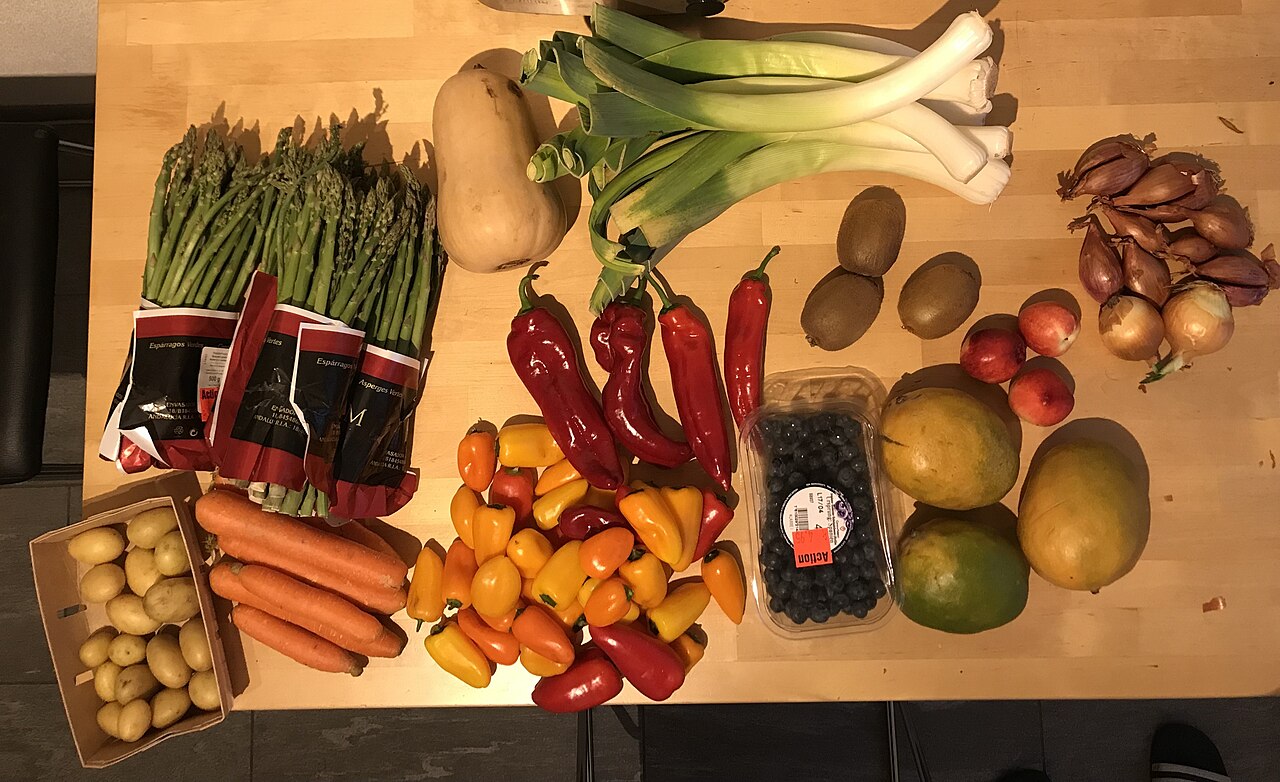
Edible vegetables and fruit rescued from a food retailer's waste container, laid out on a table: PizzaToast, CC0

Figures are national or global estimates from the sources named, with the uncertainty those sources give. Country rankings compare reported totals, not responsibility or effort.
Checked 2026-11-22.