Underwater noise
A pressure on the living planet, and what is being done about it.
The ocean is a world of sound. Whales and dolphins depend on it for communicating, finding food, attracting mates, detecting predators and navigating. Light fades quickly underwater, but sound travels far.
People have made that world loud. Ships produce continuous noise all year round, and construction, seismic surveys with airguns, explosions and sonar add sharp, impulsive bursts. One study estimates that 91% of Europe's seas are exposed to continuous shipping noise.
Why it matters
- One study estimates that 91% of Europe's seas are exposed to continuous shipping noise and 10% to high shipping density. EEA · Underwater noise pollution in Europe's seas
- Impulsive noise from construction, seismic exploration with airguns, explosions and high-frequency sonar is found in 8% of Europe's seas. EEA · Underwater noise pollution in Europe's seas
- Continuous noise from ships can severely injure marine species and mask the sounds they rely on for communication, hunting and self-defence. EEA · Underwater noise pollution in Europe's seas
- Underwater noise in Europe's seas rose steadily until 2019, fell sharply in 2020 during COVID-19 and has been rising gradually since. The Baltic Sea has the highest sound energy density, because of its shallow waters and heavy shipping. EEA · Underwater noise pollution in Europe's seas
What it touches
Species
Why it happens, and what helps
Main causes
- Commercial shipping, which makes continuous noise all year round
- Seismic surveys with airguns for oil and gas
- Pile driving for offshore construction
- Military sonar and explosions
What is proven to help
- Ships that slow down in sensitive areas
- Quieter propellers and hull designs
- Noise limits and timing rules for pile driving and seismic surveys
- Shipping lanes moved away from feeding and breeding grounds
- Marine protected areas where noise is managed
What you can do
- Support ports and shipping companies that run quiet-ship and slow-down programmes
- Choose products shipped less far when you can
- Support ocean research and protected areas
Sources and photo credits
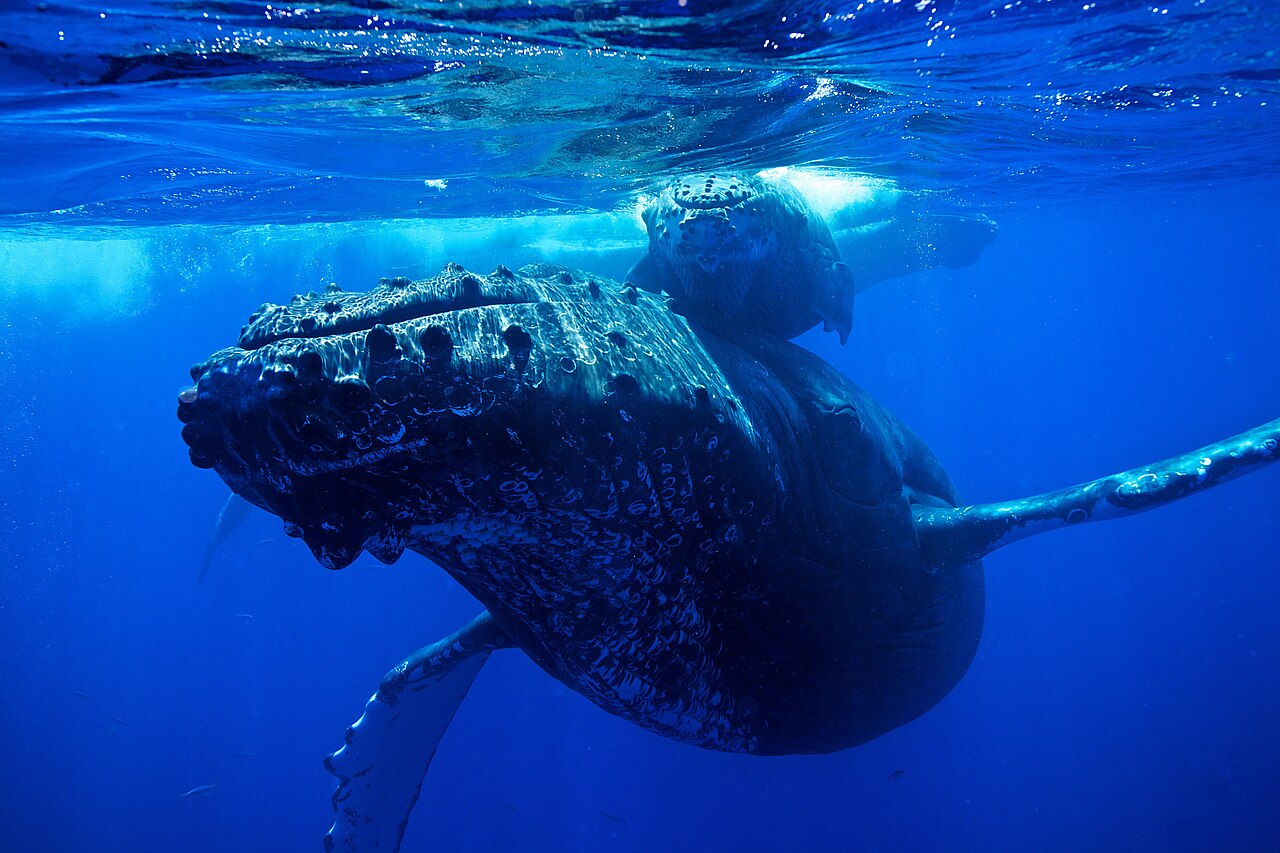
A humpback whale and her calf swimming in clear blue water off Hawaii: National Marine Sanctuaries, Public domain

Figures are national or global estimates from the sources named, with the uncertainty those sources give. Country rankings compare reported totals, not responsibility or effort.
Checked 2026-11-23.